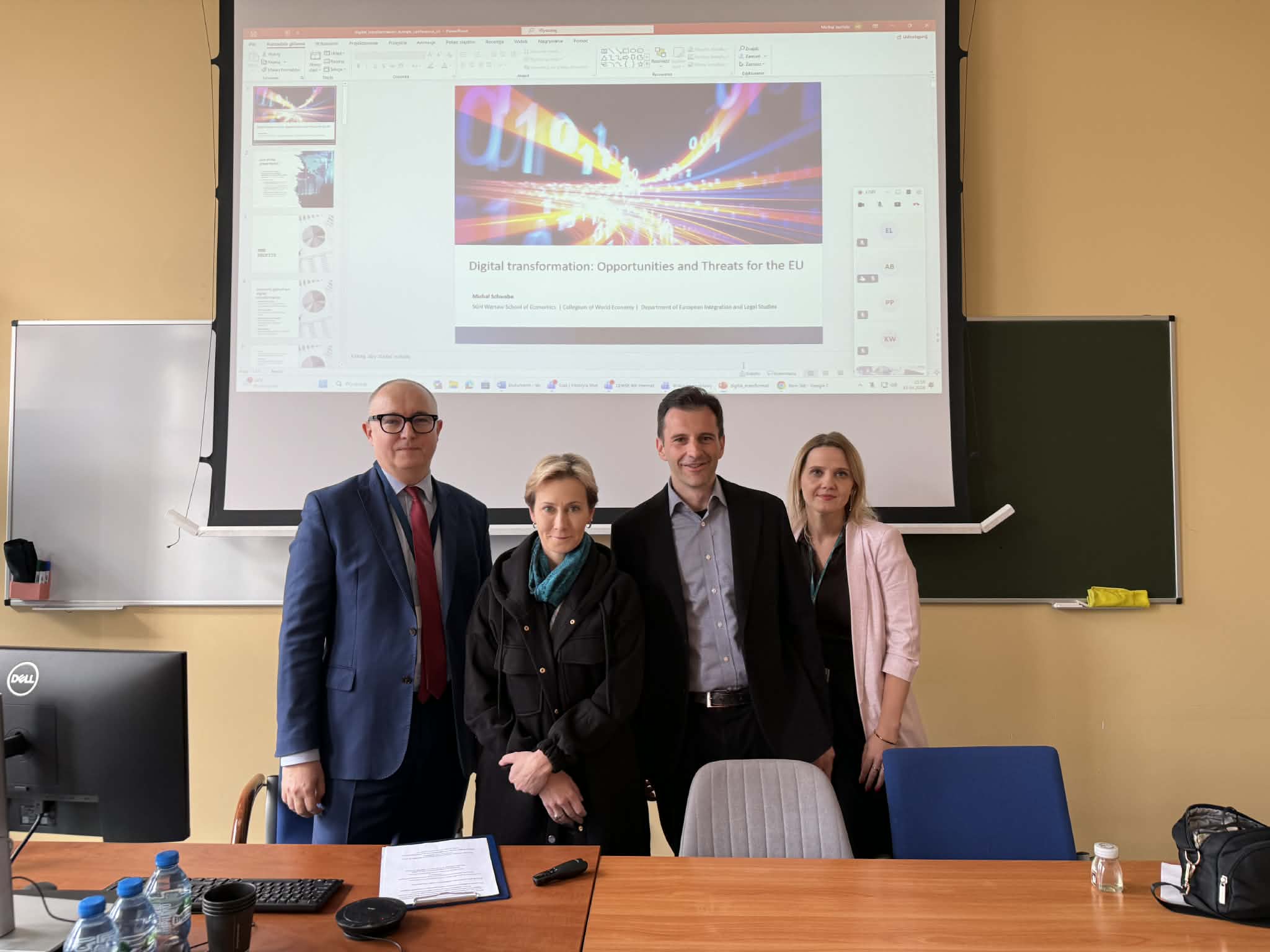
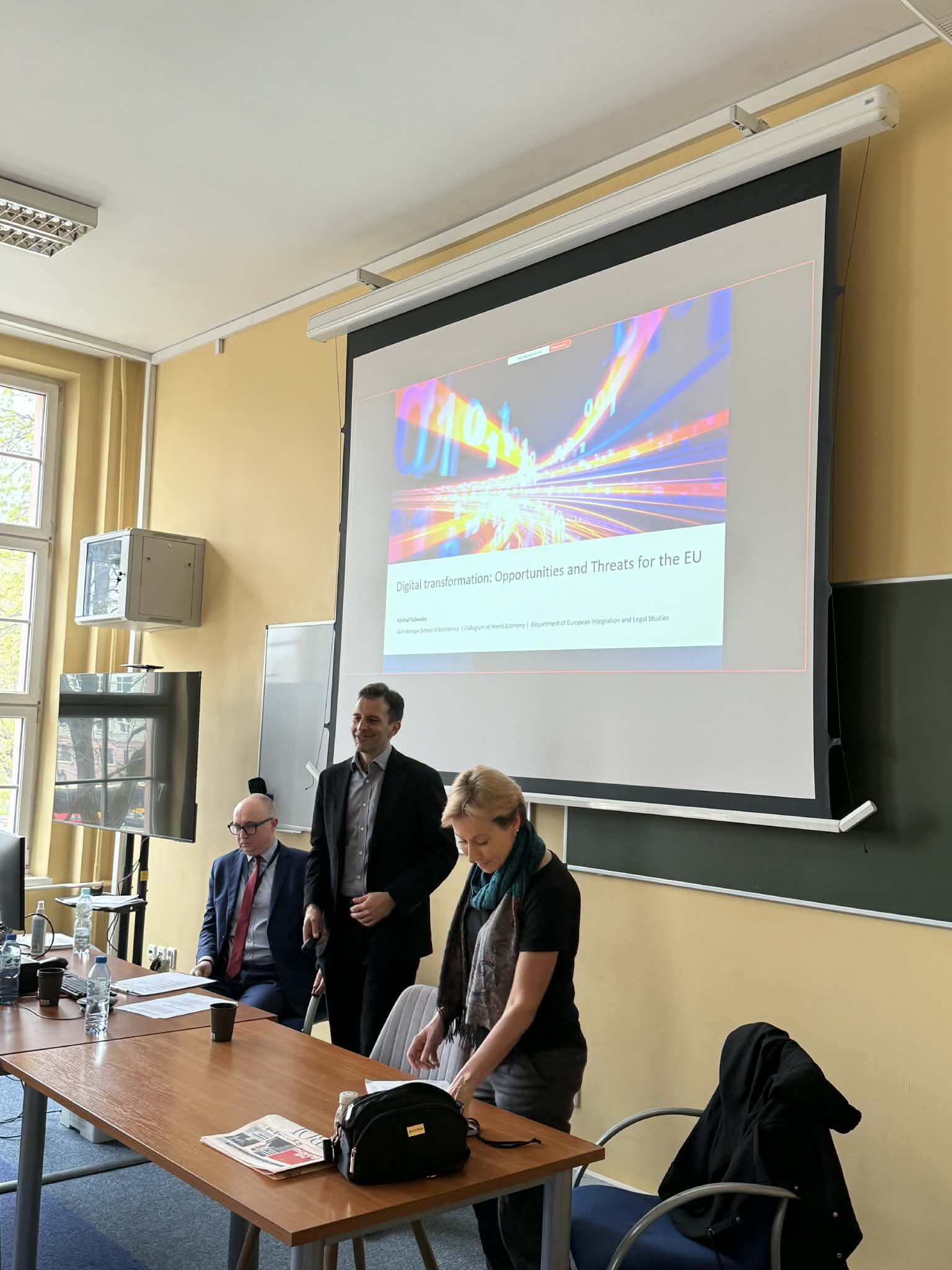
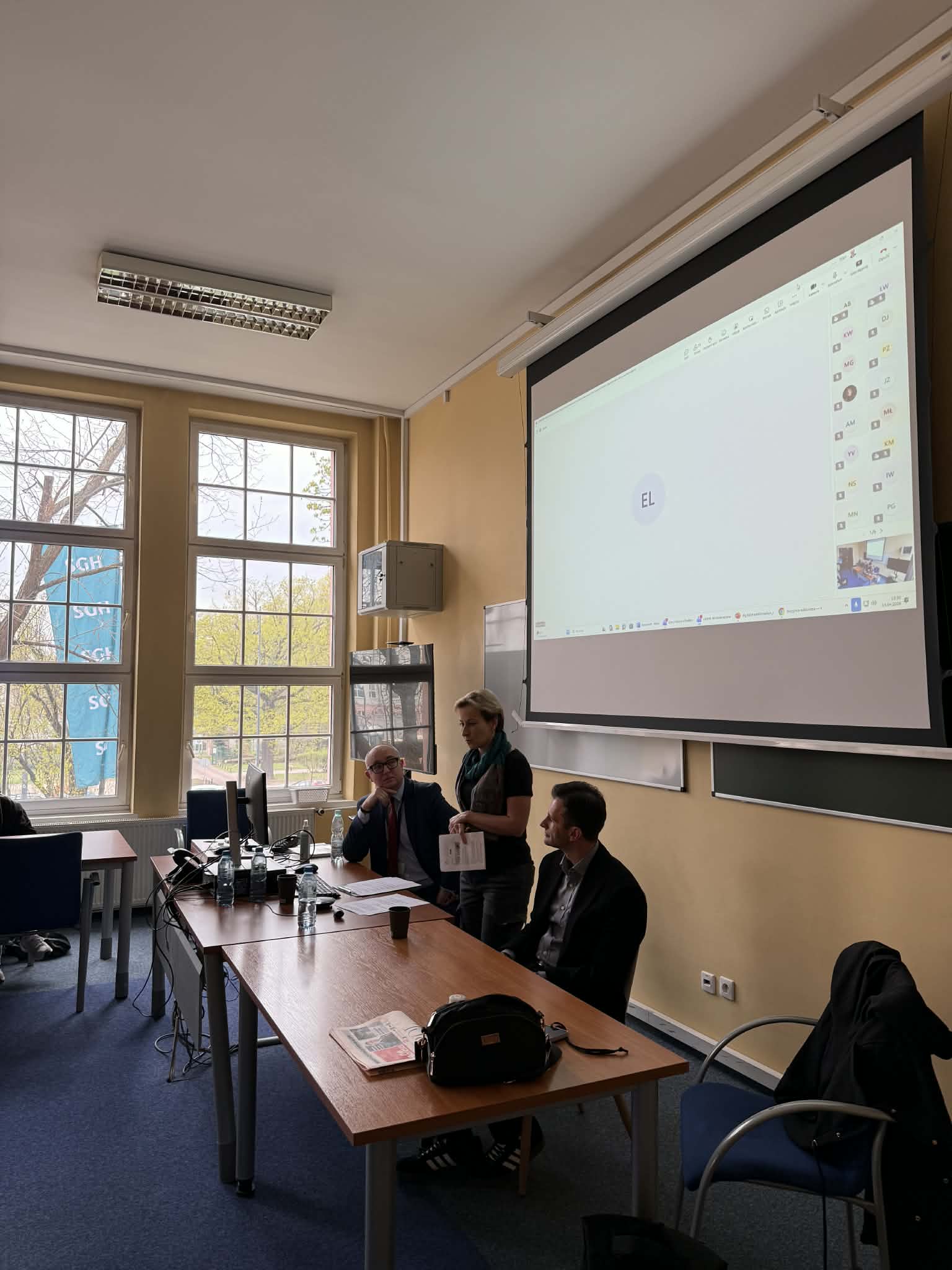
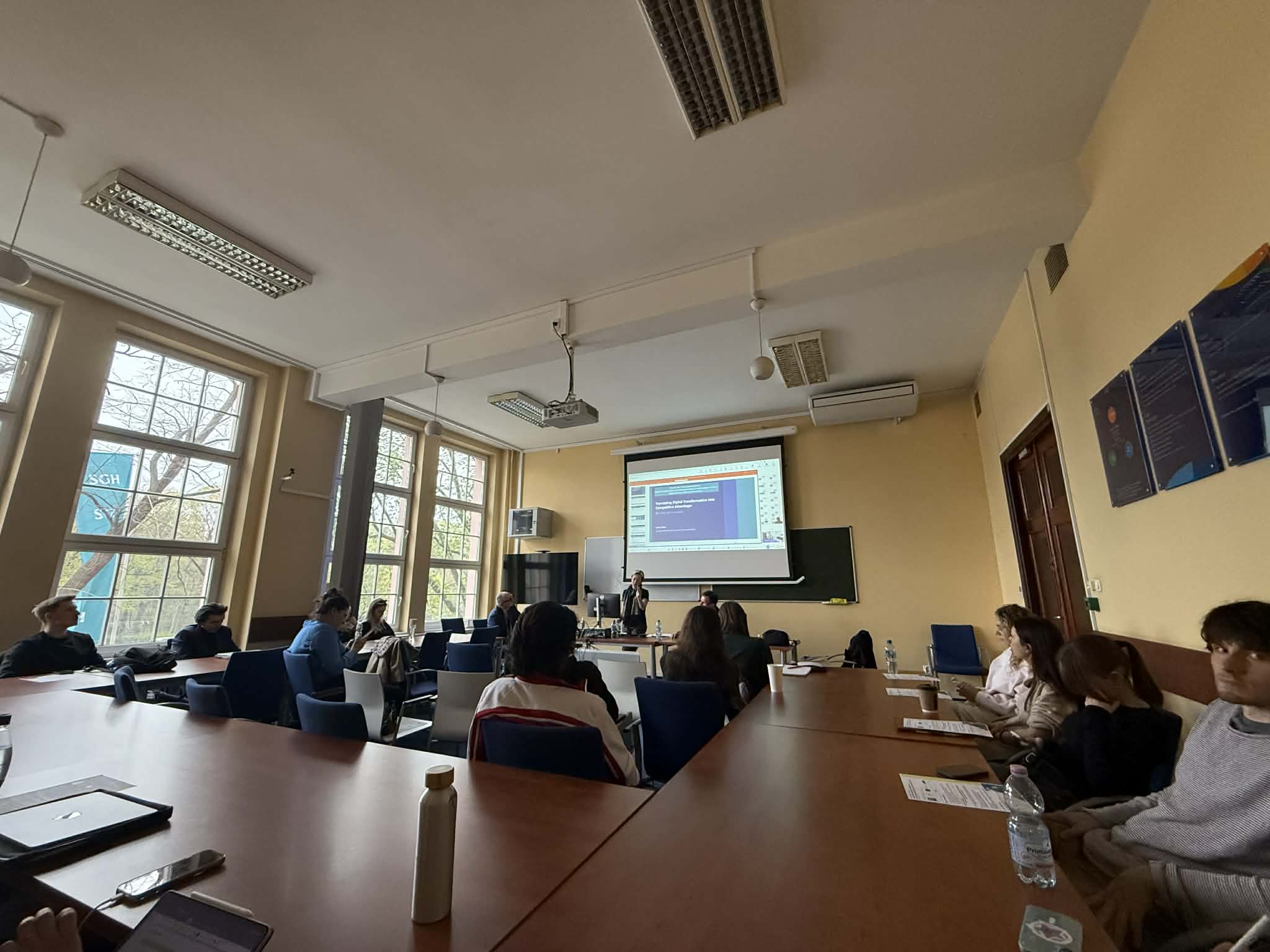
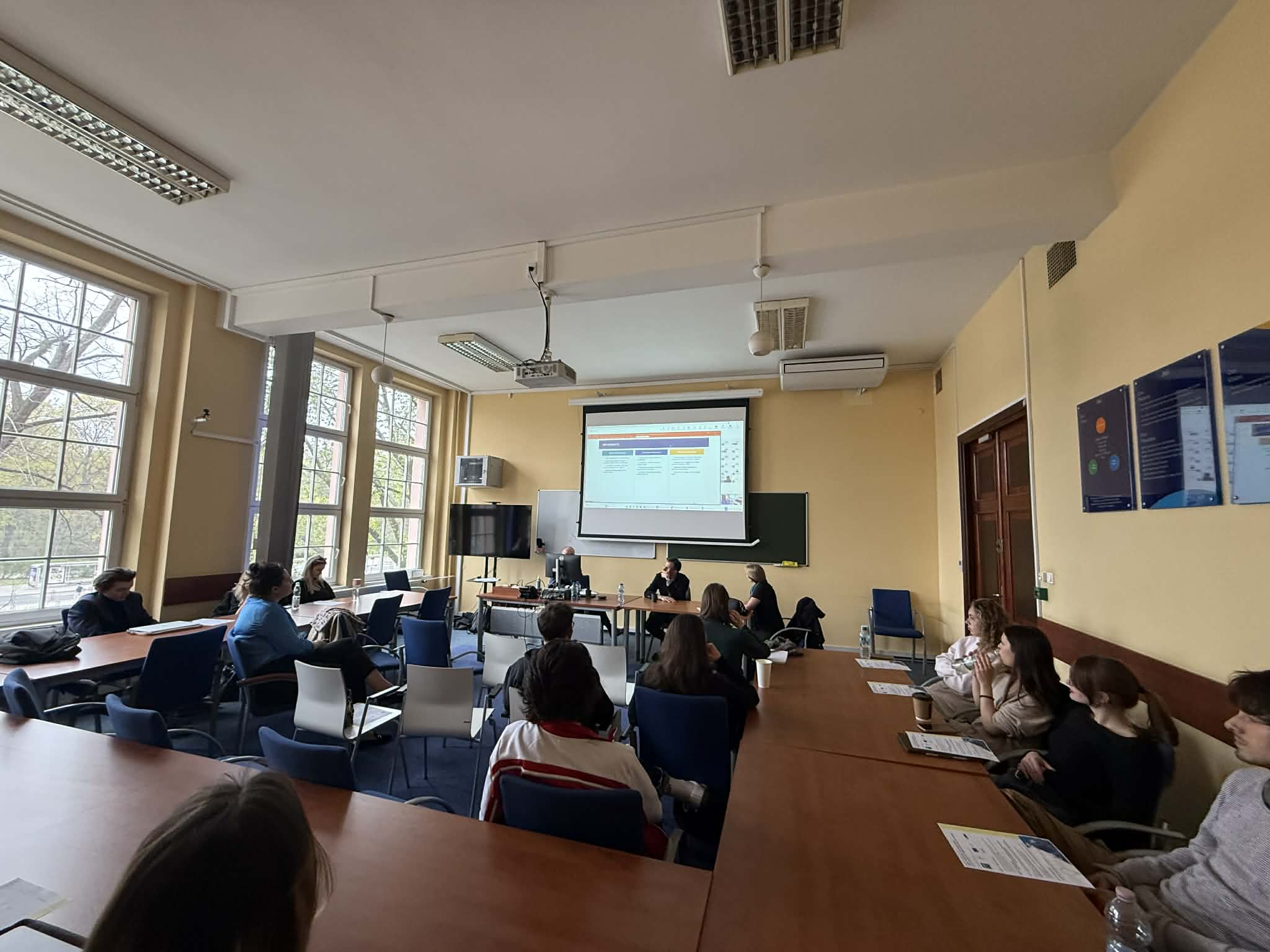
On the 15th of April 2026, the 4th International Seminar titled “Digital Transformation and Competitiveness in the European Union: Opportunities, Risks and Innovation” was held as part of the CEWSE II project.
The event focused on the key challenges associated with the EU’s digital transformation and its significance for sustainable development and improving the competitiveness of EU economies. During the seminar, experts highlighted the opportunities and risks associated with supporting the digital transformation in the EU, as well as the importance of innovation for the EU’s digital transformation.
The invited speakers included:
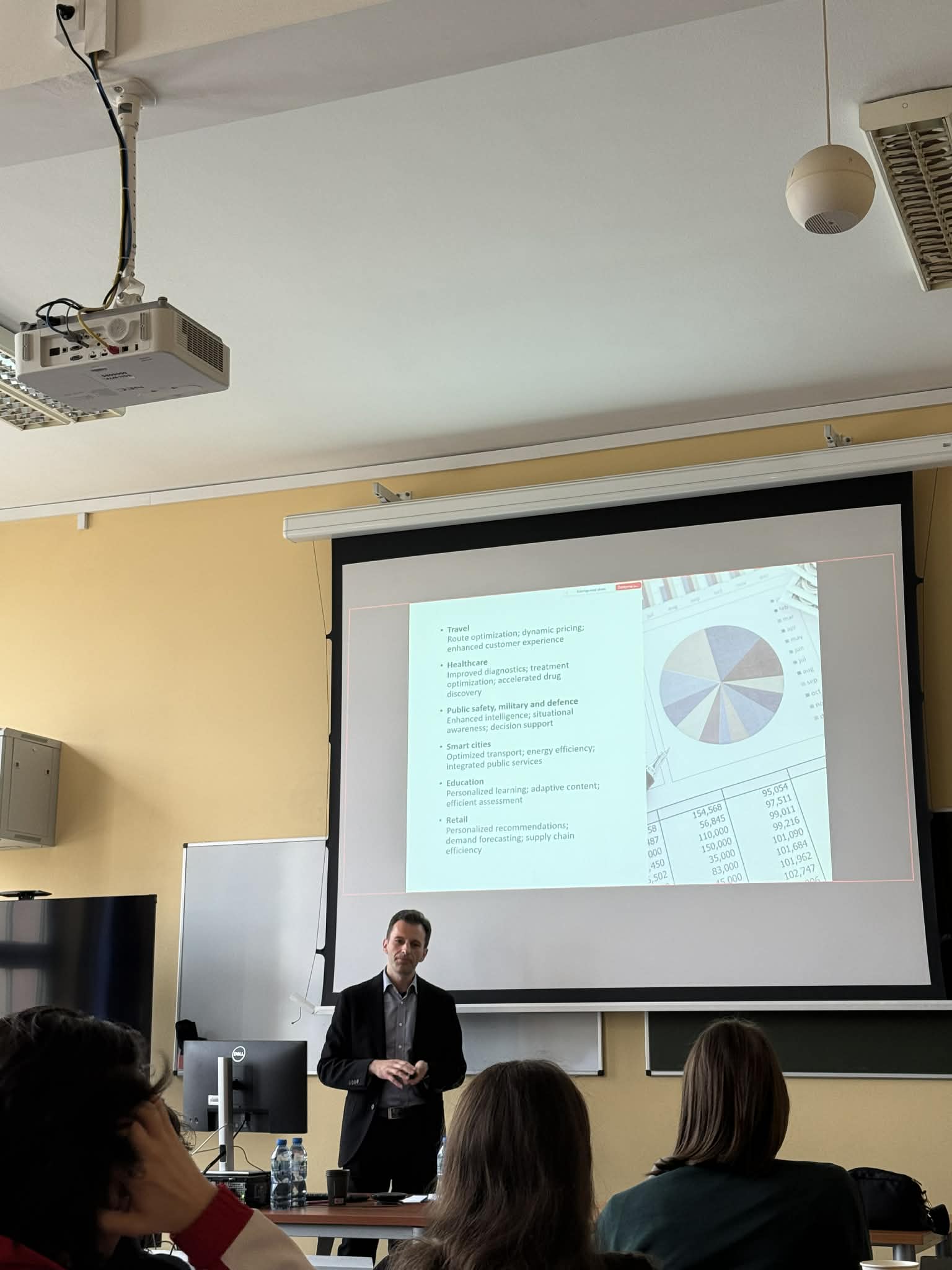
- Prof. Michał Schwabe – Department of European Integration and Legal Studies, Collegium of World Economy, SGH Warsaw School of Economics, Poland
- Prof. Anita Talaja – Department of Management Faculty of Economics, Business and Tourism, University of Split, Croatia
In his speech, Prof. Michał Schwabe presented the digital transformation as a multifaceted process shaping Europe’s economic, social and political landscape. The presentation took a macroeconomic perspective, situating current digital trends within a broader structural context whilst also taking into account their geopolitical dimension. Particular attention was paid to the dual nature of the digital transformation, understood both as a source of new opportunities and as a factor generating systemic risk and asymmetries. The presentation also reflected on the potential long-term consequences of these dynamics for Europe’s competitiveness, social cohesion and strategic autonomy. Prof. Anita Talaja, in turn, addressed the issues under discussion from a microeconomic perspective, focusing her remarks on the importance of innovation for the EU’s digital transformation.
Members of the CEWSE II project also participated in the seminar: Prof. Ewa Latoszek as a project director, Dr Marta Pachocka as moderator, and Dr Anna Wójtowicz and Dr Michał Jasiński as co-organisers of the event.
The seminar provided an important forum for the exchange of knowledge and experience, as well as for in-depth reflection on the directions of digital transformation in the European Union.
Funded by the European Union. Views and opinions expressed are however those of the author(s) only and do not necessarily reflect those of the European Union or the European Education and Culture Executive Agency (EACEA). Neither the European Union nor EACEA can be held responsible for them.