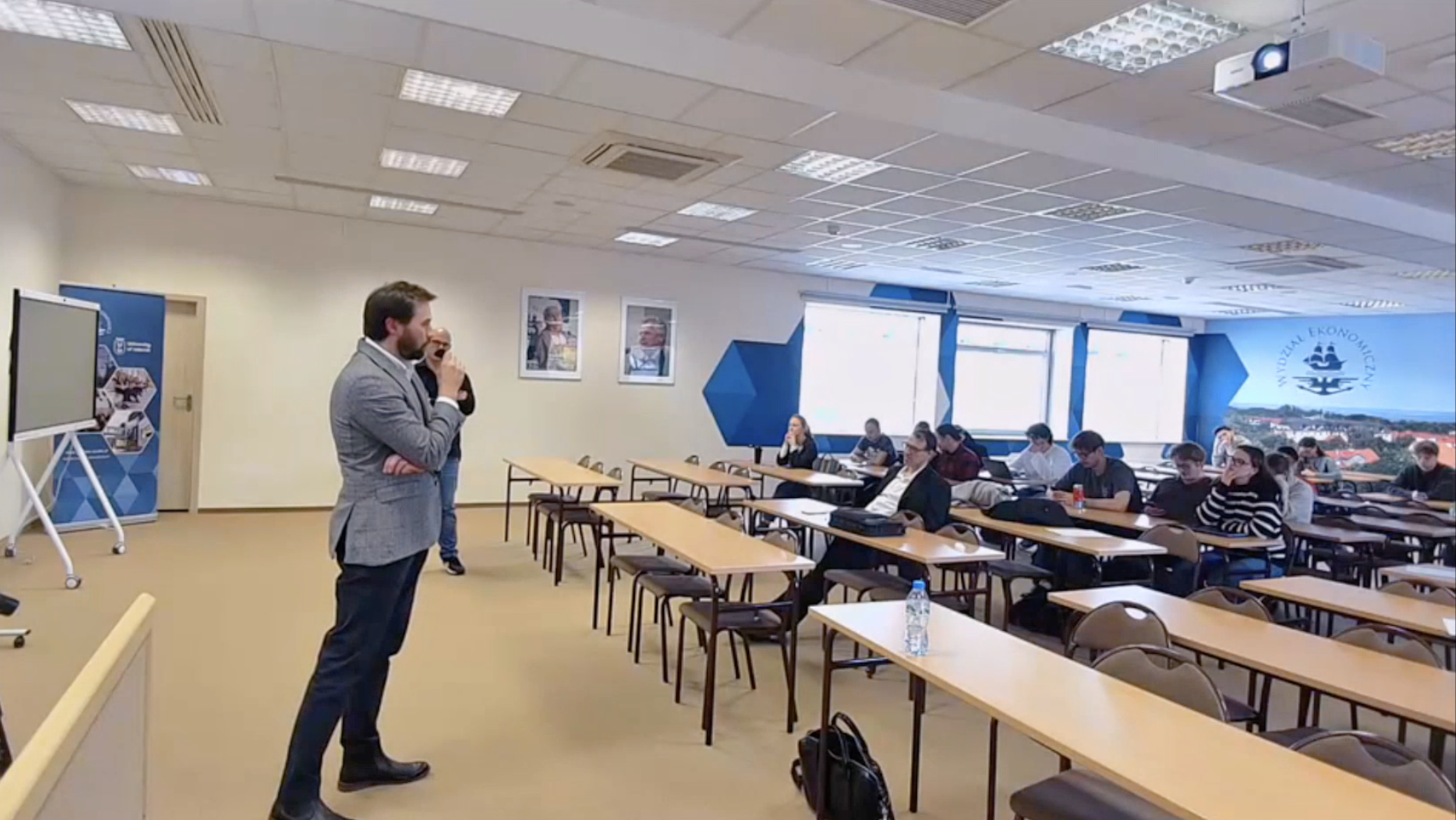
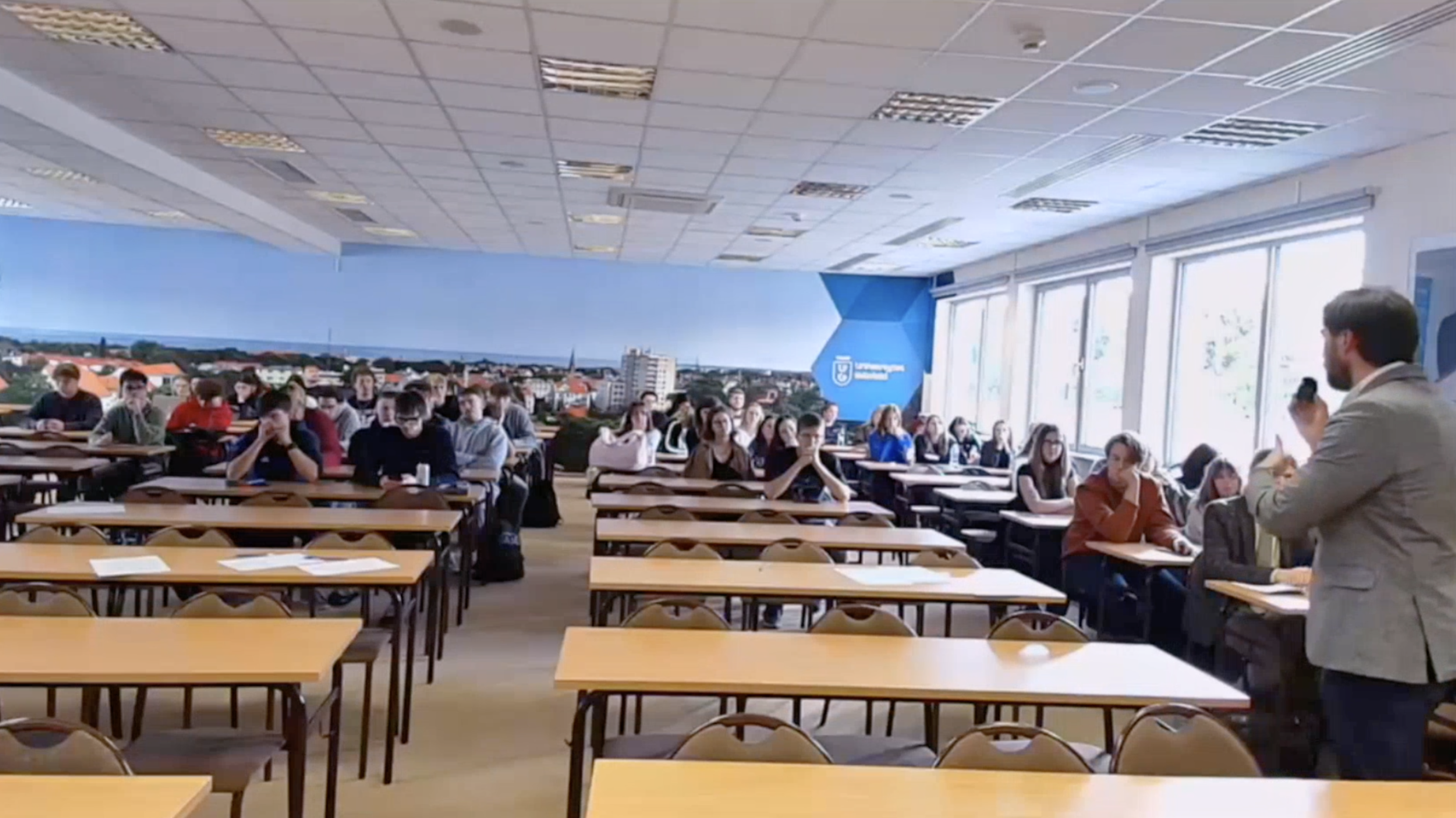
On 21 October 2026, the Faculty of Economics of the University of Gdańsk hosted the CEWSE 5th International Seminar entitled “Wind Energy, Logistics and Inland Ports in the European Union: Infrastructure Foundations for Resilience and the Green Transition.” The event brought together experts to discuss the role of transport and energy infrastructure in strengthening the resilience, sustainability, and competitiveness of the European Union.
The seminar commenced with a presentation by Mariusz Mikoliūnas, who examined the importance of inland waterway transport in Lithuania as a key element of a resilient and sustainable transport and logistics system. He highlighted the potential of inland waterways to diversify transport modes, strengthen supply chain security, and improve multimodal transport integration. The presentation also emphasized the importance of infrastructure investments, climate adaptation measures, and EU transport policy in supporting efficient and low-emission logistics networks.
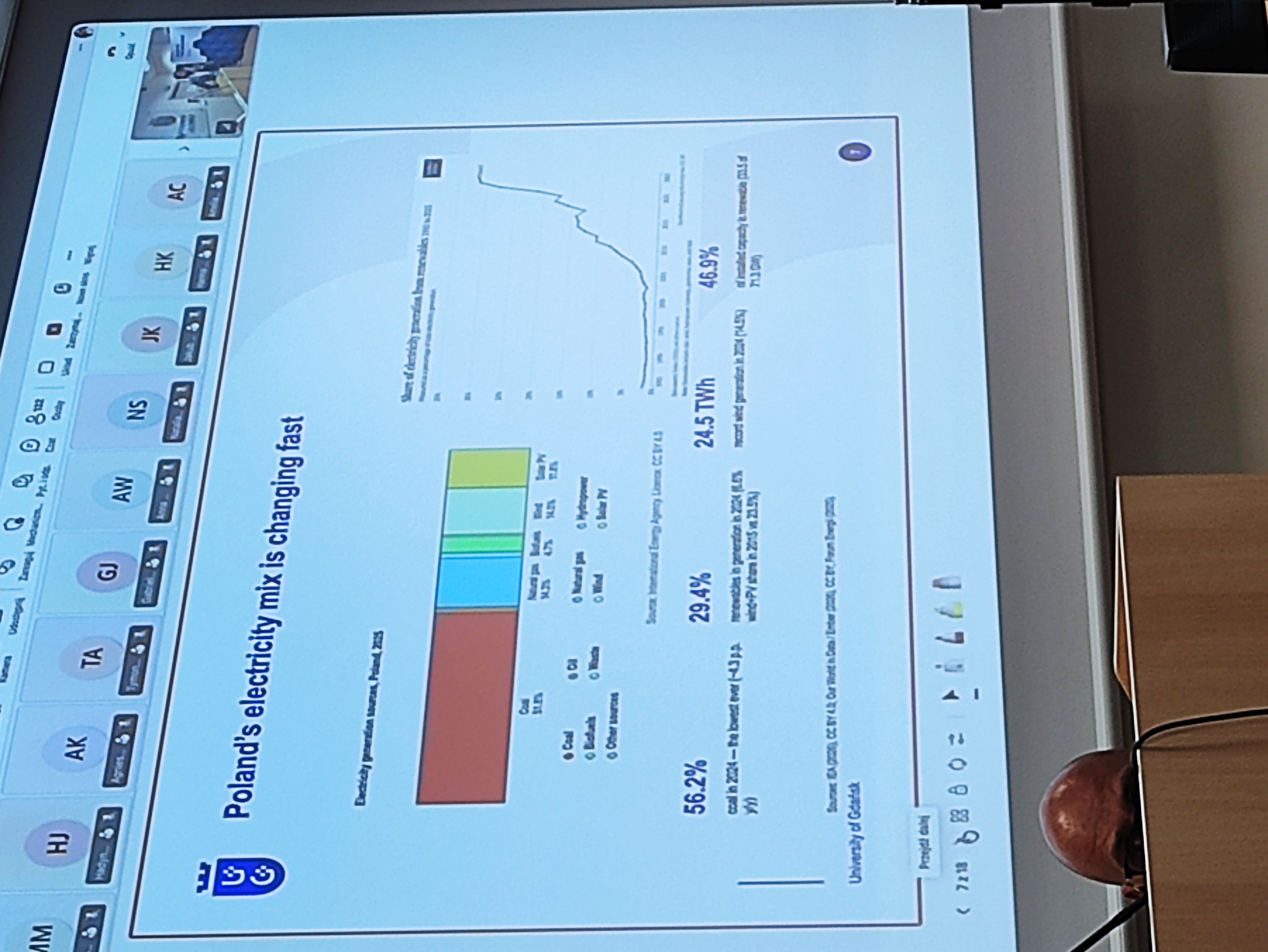
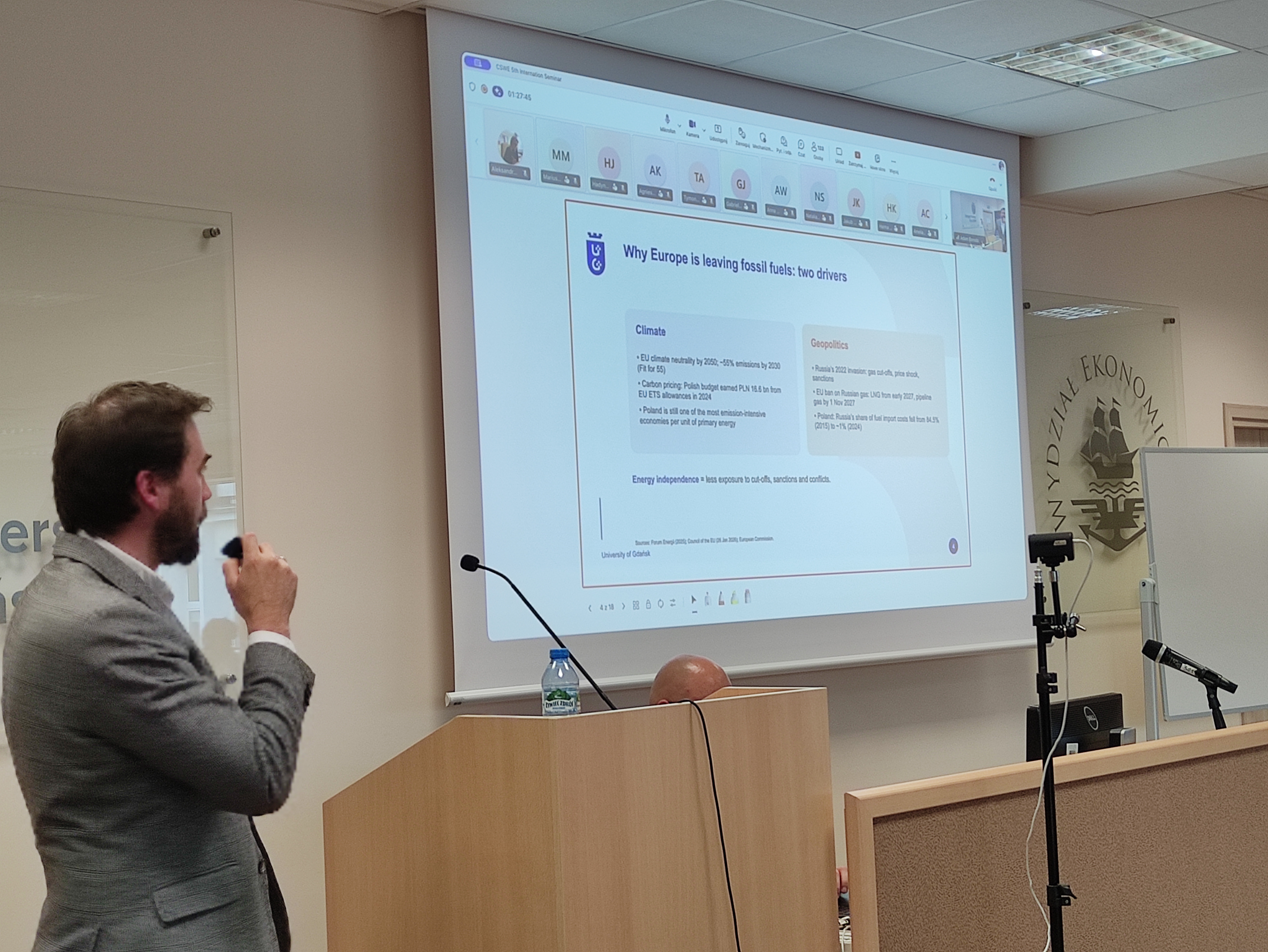
The second presentation, delivered by Dr Tomasz Laskowicz, focused on the role of offshore wind energy and other renewable energy sources in building a secure, resilient, and sustainable European energy system. Particular attention was paid to the diversification of energy sources, the reduction of dependence on fossil fuel imports, and the enhancement of Europe’s energy security amid geopolitical challenges and climate change. The presentation also highlighted the importance of offshore wind infrastructure, renewable energy integration into electricity grids, energy storage solutions, and cross-border energy interconnections. The discussion underscored the significance of coordinated European energy policies in accelerating the green transition while strengthening the long-term competitiveness of the European economy.
The seminar provided an excellent platform for the exchange of knowledge and experiences on the future development of sustainable transport and energy infrastructure in the European Union.

Funded by the European Union. Views and opinions expressed are however those of the author(s) only and do not necessarily reflect those of the European Union or the European Education and Culture Executive Agency (EACEA). Neither the European Union nor EACEA can be held responsible for them.