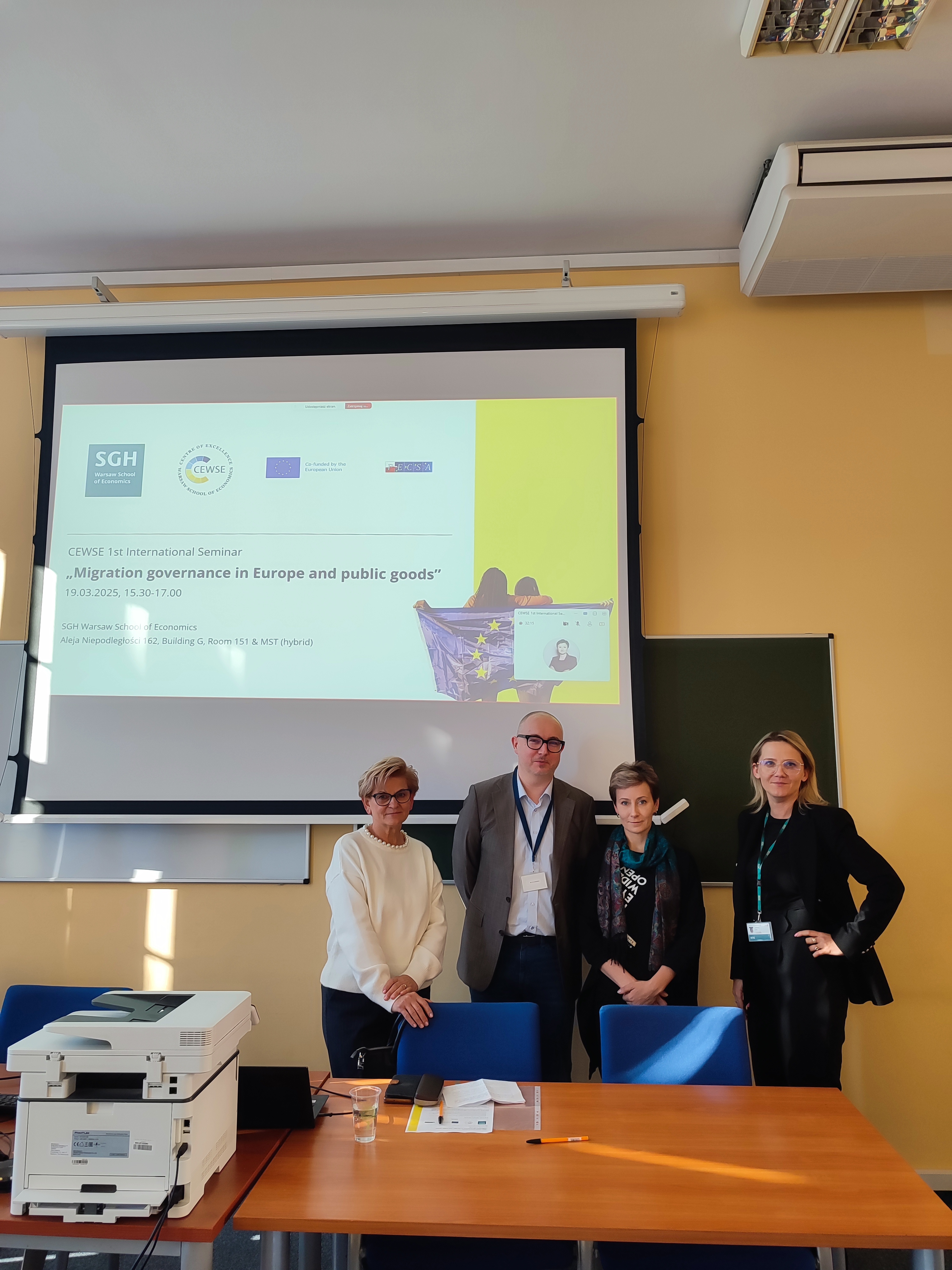
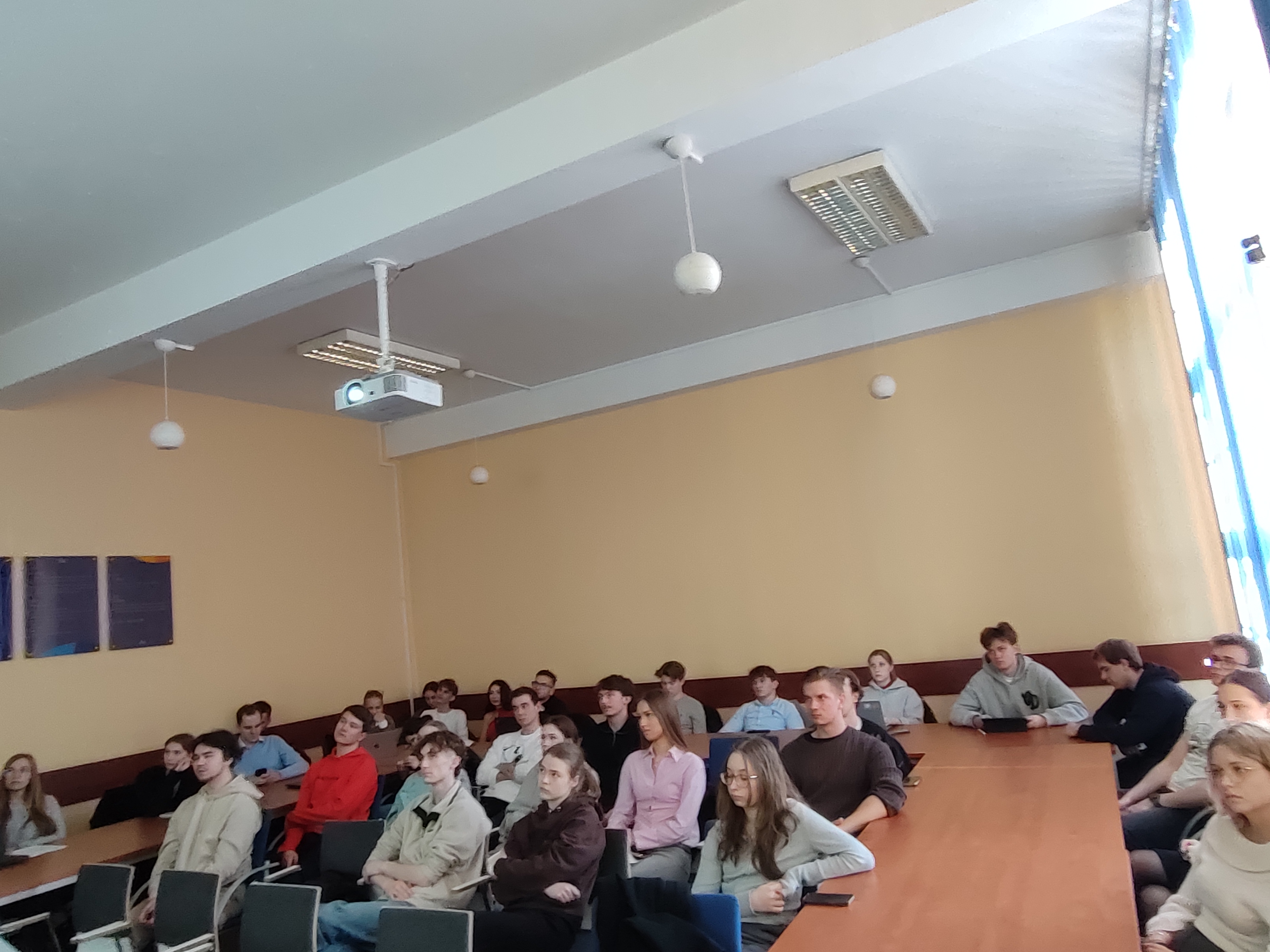
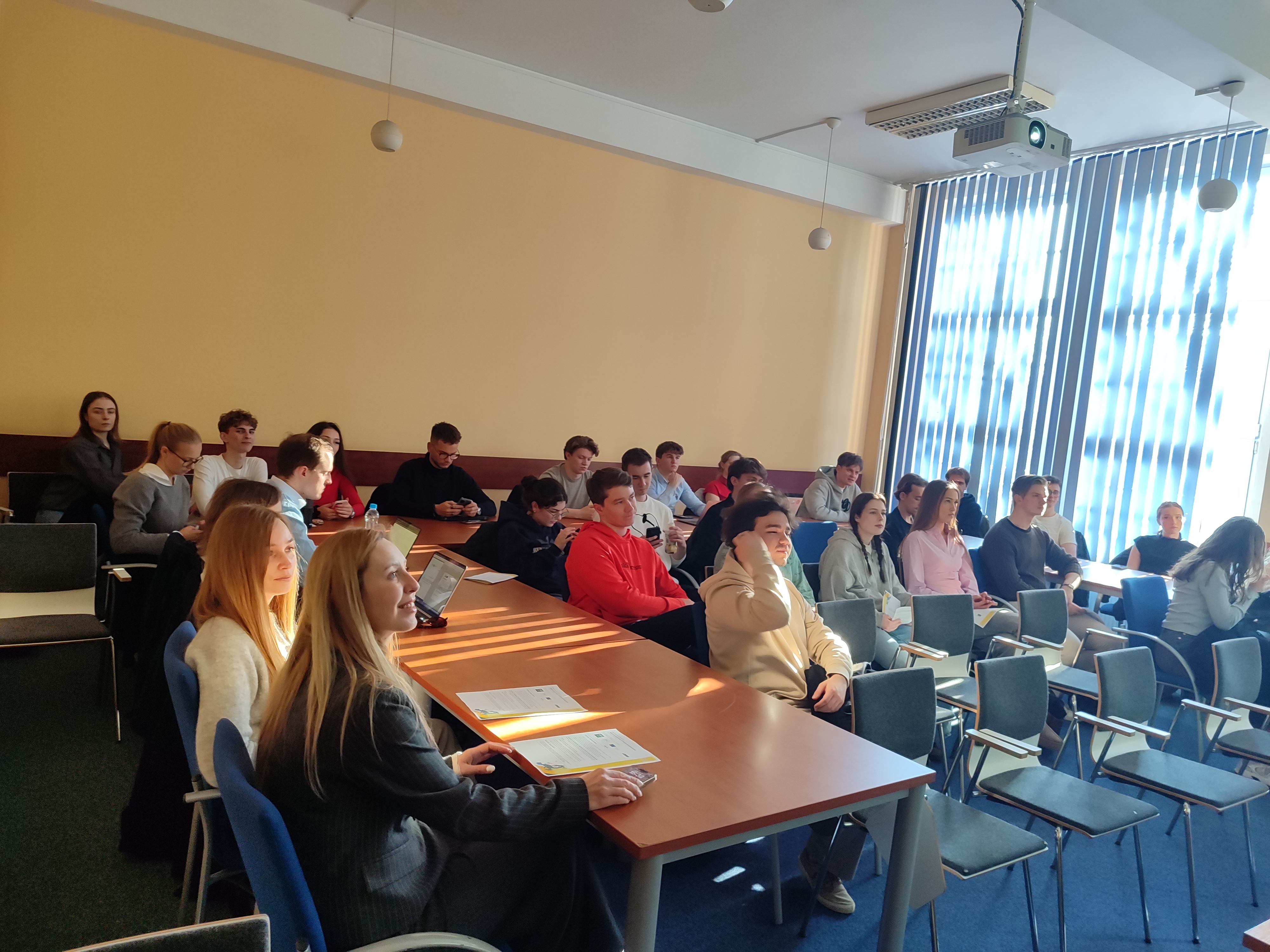
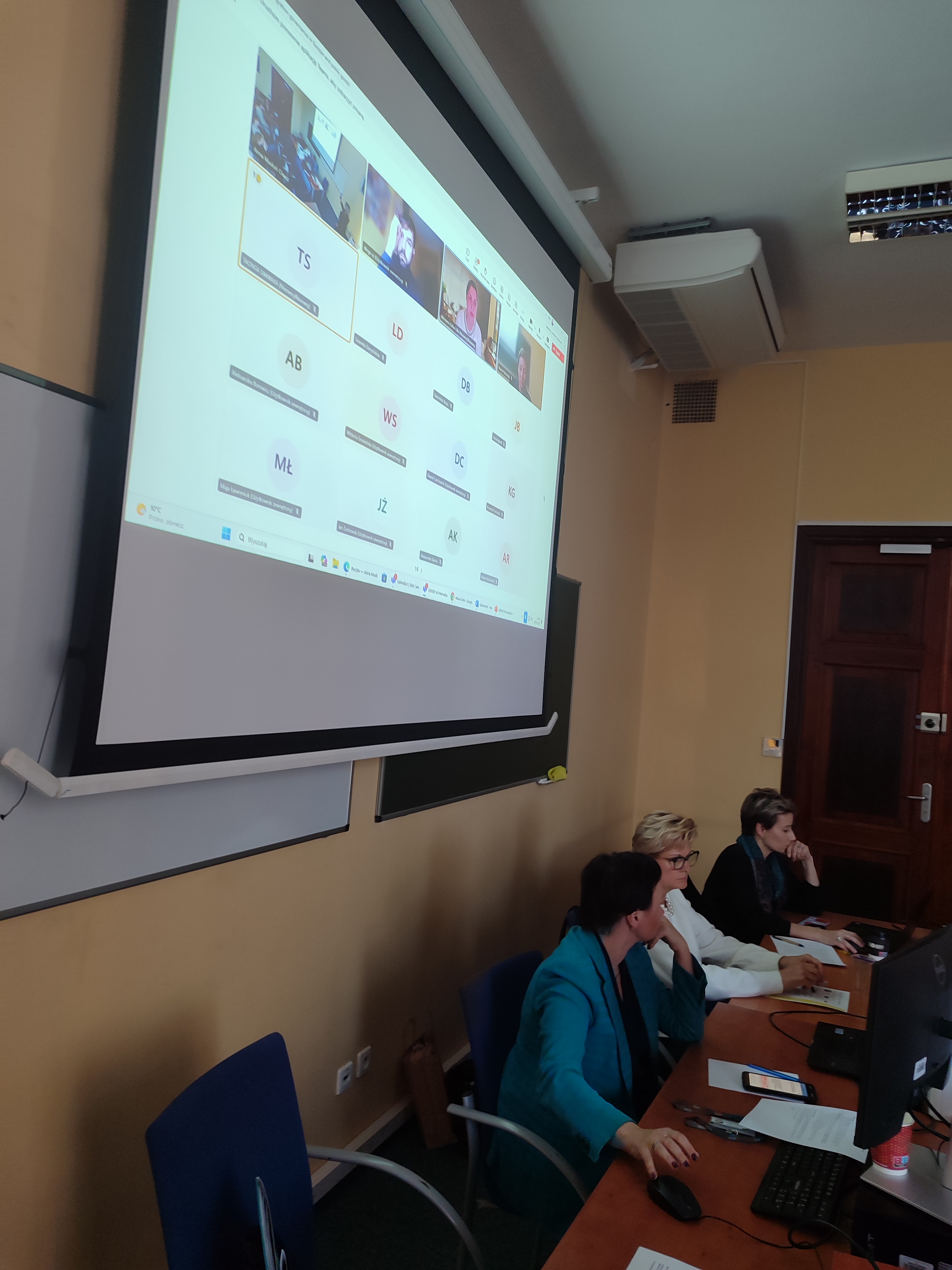
The Jean Monnet Centre of Excellence at the Warsaw School of Economics (SGH) hosted the CEWSE 1st International Seminar „Migration governance in Europe and public goods” on March 19, 2025, in collaboration with multiple co-organisers and partners across Poland, Romania, Italy, Ukraine, Lithuania, and Czechia. The event featured expert speakers Dr. Diego Caballero-Vélez (University of Messina, Italy) and Dr. Edina Lilla Mészáros (University of Oradea, Romania). They discussed migration governance and its impact on public goods in Central and Eastern Europe. The hybrid event attracted over 100 participants. To review the key points of the webinar, visit https://www.youtube.com/@CentreofExcellenceSGH .
Diego opened with a theoretical perspective, analysing refugee protection through the lens of "public goods" theory. He described the "collective action dilemma," where some member states "free-ride" on the security and stability provided by others, comparable to defense spending in NATO. He argued that cost perceptions vary based on identity; for example, Poland perceived the costs of accepting Middle Eastern refugees in 2015 differently than accommodating Ukrainians later. To resolve these imbalances, the EU has evolved from the failed 2015 mandatory relocation schemes to the "New Pact on Migration." This pact introduces "mandatory flexible solidarity," attempting to balance burden-sharing by allowing states to choose between relocating asylum seekers or providing financial and operational support, though the practical definition of this flexibility remains debated.
Edina provided a case study of Romania, traditionally a country of emigration and transit rather than destination. She highlighted that the departure of millions of Romanians to Western Europe created acute labor shortages, forcing the government to open the labor market to workers from Asian countries like Nepal and Sri Lanka. While Romania has recently seen a positive net migration balance due to returning citizens and foreign workers, retention is difficult; many workers use Romania as a "springboard" to reach Western Europe. Additionally, despite a national strategy viewing migration as "a process to be managed, not a problem to be solved," refugees still face significant integration challenges regarding housing and low financial subsistence.
The session concluded with discussions.

Projekt finansowany przez Unię Europejską. Poglądy i opinie wyrażone na stronie są jednak wyłącznie poglądami i opiniami autorów i niekoniecznie odzwierciedlają poglądy Unii Europejskiej lub Europejskiej Agencji Wykonawczej ds. Edukacji i Kultury (EACEA). Unia Europejska, ani EACEA nie ponoszą za nie odpowiedzialności.